

From early escape to immune evasion: Mapping drug resistance in advanced gastric cancer
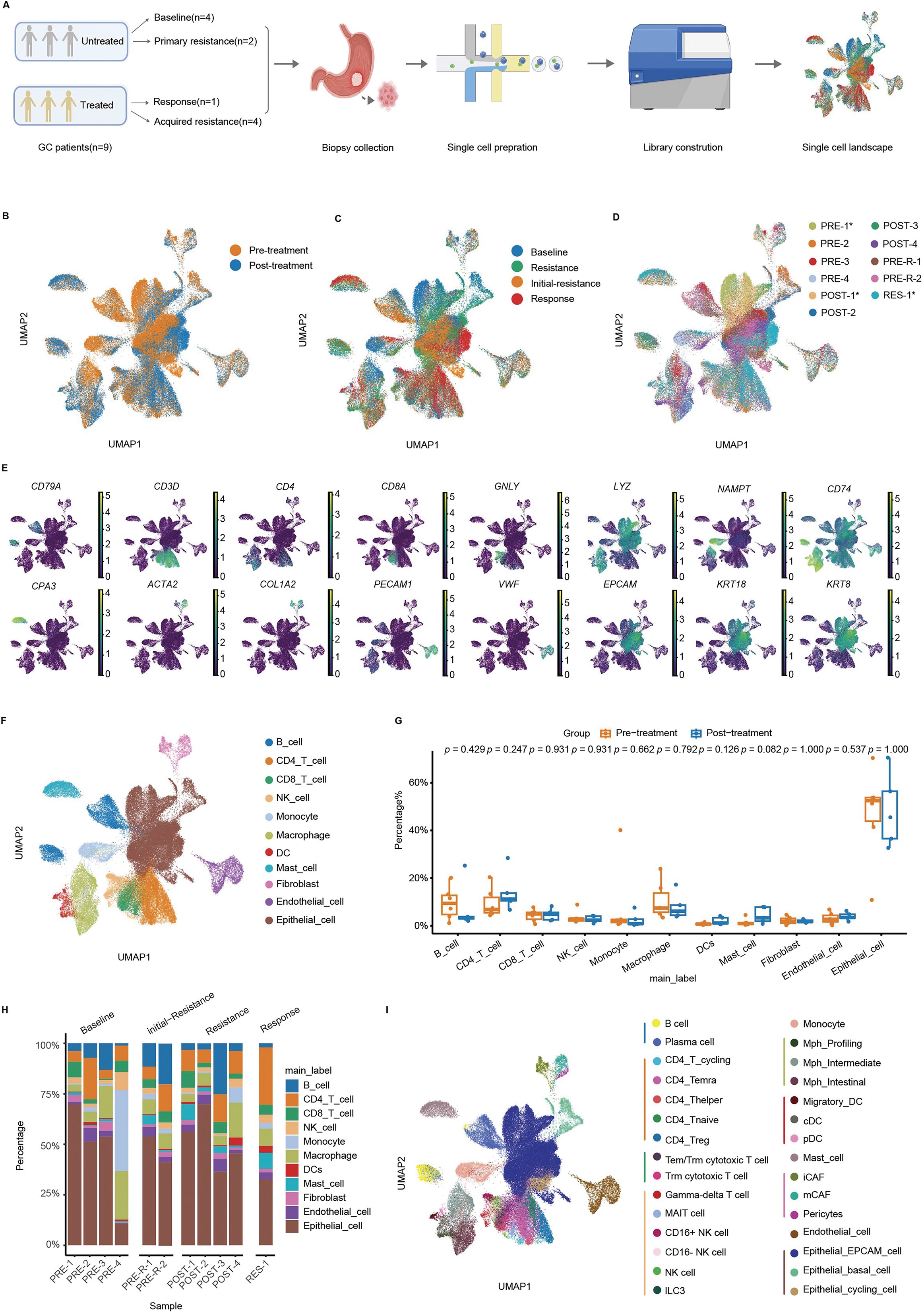
Single-cell landscape of GC under T-DXd treatment.
GA, UNITED STATES, February 20, 2026 /EINPresswire.com/ -- A next-generation antibody–drug conjugate has transformed treatment for HER2-positive gastric cancer, yet many patients fail to benefit or relapse rapidly. Using single-cell analysis of patient tumor samples, researchers uncovered distinct mechanisms that drive both early and late resistance to trastuzumab deruxtecan. The study shows that tumors resistant from the outset are marked by a mucus-associated protein that limits drug binding, while cancers that relapse later suppress drug activation and reshape their immune environment. By linking cellular heterogeneity, metabolic reprogramming, and immune escape, the findings reveal why a highly potent therapy can lose effectiveness—and point to biomarkers and combination strategies that could help restore durable responses.
HER2-positive gastric cancer accounts for a substantial proportion of advanced cases and has long been treated with HER2-targeted therapies. While trastuzumab deruxtecan has shown superior activity compared with earlier agents, most patients either fail to respond initially or eventually develop resistance. Tumor heterogeneity, metabolic adaptation, and changes in the tumor microenvironment are believed to play critical roles, yet these processes remain poorly understood in clinical samples. Traditional bulk analyses obscure rare but influential cell populations that may drive resistance. In light of these challenges, a deeper investigation into treatment-induced cellular evolution and resistance mechanisms at single-cell resolution is urgently needed.
Researchers from Peking University Cancer Hospital and collaborating institutions report new insights into drug resistance in advanced gastric cancer in a study published on 19 December 2025 in Precision Clinical Medicine. Analyzing tumor biopsies from patients enrolled in the phase II DESTINY-Gastric06 trial, the team applied single-cell RNA sequencing to track how cancer cells and their surrounding immune environment evolve during treatment with trastuzumab deruxtecan. The work identifies molecular drivers of both primary and acquired resistance and highlights potential biomarkers and therapeutic targets to improve patient outcomes.
The researchers profiled nearly 92,000 individual cells from gastric cancer biopsies collected before treatment, during response, and after resistance emerged. By dissecting epithelial tumor cells at single-cell resolution, they identified distinct transcriptional programs linked to different resistance stages. Tumors showing primary resistance were enriched for metabolic pathways associated with glycolysis and lipid metabolism. Among these, MUC3A stood out as a key marker: high expression predicted shorter progression-free survival and experimentally reduced sensitivity to trastuzumab deruxtecan by limiting drug binding to HER2-positive cells.
In contrast, acquired resistance followed a different trajectory. As treatment progressed, tumor cells downregulated HER2 and cell-cycle genes while upregulating CST3, a natural inhibitor of lysosomal proteases required to cleave the drug's linker and release its cytotoxic payload. Functional assays confirmed that CST3 dampens drug activation, allowing tumor cells to survive despite continued therapy.
Beyond tumor-intrinsic changes, the study revealed dynamic remodeling of the tumor microenvironment. Initial treatment enhanced immune-cell infiltration and antigen presentation, but resistant tumors shifted toward an immunosuppressive state marked by reactivation of transforming growth factor-beta signaling and increased PD-1 expression on immune cells. Together, these findings show that resistance emerges through coordinated cellular, metabolic, and immune adaptations.
"Resistance to highly effective therapies is rarely driven by a single factor," said one of the senior investigators. "By examining tumors at single-cell resolution, we were able to see how different cancer cell populations adapt in distinct ways—some blocking drug binding early on, others disabling drug activation or reshaping the immune environment over time. This layered view of resistance helps explain why responses can be short-lived and underscores the importance of dynamic biomarkers when treating advanced gastric cancer."
The findings suggest several clinical strategies to improve outcomes for patients with HER2-positive gastric cancer. Measuring MUC3A expression could help identify patients unlikely to benefit from trastuzumab deruxtecan upfront, enabling more precise treatment selection. Targeting CST3 or restoring lysosomal drug processing may help overcome acquired resistance. In parallel, the observed shift toward immune suppression supports combining trastuzumab deruxtecan with immunotherapies or agents targeting TGF-β signaling. More broadly, the study demonstrates how single-cell technologies can guide personalized combination therapies by revealing when and how tumors adapt under therapeutic pressure.
References
DOI
10.1093/pcmedi/pbaf038
Original Source URL
https://doi.org/10.1093/pcmedi/pbaf038
Funding information
Funding support for the study was provided by the Beijing Xisike Clinical Oncology Research Foundation (No. Y-2022HER2AZMS-0377 to Z.P.), Beijing Natural Science Foundation (grant number 7242088 to X.W.), and the National Natural Science Foundation of China (grant number 82473050 to X.W.).
Lucy Wang
BioDesign Research
email us here
Legal Disclaimer:
EIN Presswire provides this news content "as is" without warranty of any kind. We do not accept any responsibility or liability for the accuracy, content, images, videos, licenses, completeness, legality, or reliability of the information contained in this article. If you have any complaints or copyright issues related to this article, kindly contact the author above.
