

Top Voltage Protector Manufacturer Zhejiang Liuyi Electrical Technology Advances Smart Power Protection
3 Phase Voltage Protector with CT
WENZHOU, ZHEJIANG, CHINA, October 19, 2026 /EINPresswire.com/ --
As electricity systems become increasingly connected and energy management requirements continue to evolve, Zhejiang Liuyi Electrical Technology Co., Ltd. is developing solutions for voltage protection, power monitoring, and electrical control. Established in 2013, the company focuses on the research and development of electrical products, with a portfolio that includes voltage protectors, smart meters, and related low-voltage electrical equipment. Its activities reflect a broader industry trend in which manufacturers are integrating protective functions, energy measurement, and intelligent control to support residential, commercial, and light industrial applications.
Voltage stability is an important consideration in modern electrical installations. Connected equipment can be affected by fluctuations in supply voltage, including conditions in which voltage rises above or falls below an acceptable operating range. Depending on the installation and the equipment involved, these conditions may disrupt operation or contribute to premature component failure. Voltage protection devices help address such risks by monitoring electrical conditions and disconnecting a circuit when configured limits are exceeded.
For property owners, contractors, distributors, and equipment integrators, selecting suitable protection equipment involves more than comparing rated current or voltage. Buyers also need to consider installation requirements, adjustment options, response characteristics, recovery behavior, monitoring functions, and compatibility with the wider electrical system. Manufacturers that can offer different product configurations and clear technical information are therefore important participants in the low-voltage electrical equipment market.
Zhejiang Liuyi Electrical Technology Co., Ltd. has developed a product portfolio that includes single-phase and three-phase voltage protectors, smart energy meters, intelligent reclosers, and other electrical appliances. Its website also presents products with functions such as remote control, energy metering, and automatic reconnection. These features address different requirements across household distribution boards, commercial premises, and selected industrial applications.
Voltage protectors are designed to monitor supply conditions and respond when measured values exceed configured thresholds. Depending on the product model, a device may provide overvoltage protection, undervoltage protection, current monitoring, or other related functions. Some models can be configured to reconnect power after conditions return to an acceptable range, often with a defined delay. The exact functions and operating limits vary by product, making model-specific technical documentation an essential part of product selection.
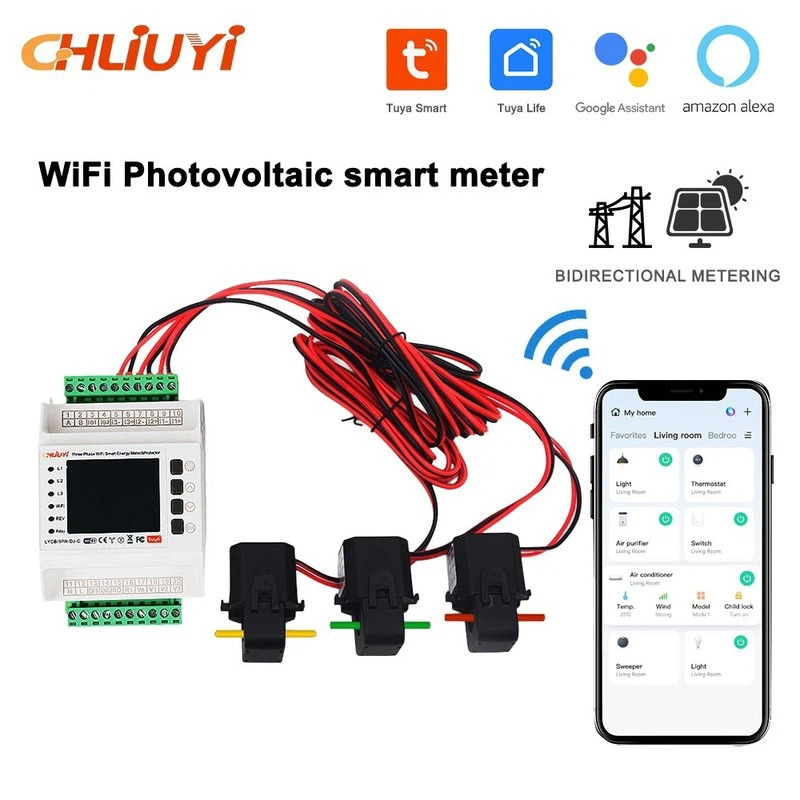
The company’s published range includes single-phase voltage protectors for residential applications and three-phase models intended for larger electrical installations. Some products combine voltage monitoring with additional features, including metering or Wi-Fi connectivity. Such combinations can help users observe electrical conditions and manage selected circuits through supported interfaces. For installations where supply conditions fluctuate, these functions can form part of a broader approach to electrical protection and operational monitoring.
Product design must take account of the environment in which the device will be installed. Residential distribution systems, commercial buildings, workshops, and unattended equipment may have different load characteristics and installation constraints. A compact device designed for DIN-rail installation, for example, can be suitable for distribution cabinets where standardized mounting and organized wiring are priorities. Other applications may call for different current ratings, connection arrangements, or monitoring capabilities.
Zhejiang Liuyi Electrical Technology Co., Ltd. also serves the energy measurement segment through its Energy Meter product category. Energy meters measure electricity consumption and can provide information that supports billing, energy-use analysis, and operational management. Depending on the model, meters may be designed for single-phase or three-phase systems, wall-mounted installations, DIN-rail mounting, or direct-current applications.
Energy measurement has become increasingly relevant to property managers and businesses seeking clearer information about how electricity is consumed. In residential and rental properties, measurement can help distinguish usage across circuits or units where the system has been designed for that purpose. In commercial settings, it can support energy tracking for lighting, air conditioning, equipment, and other electrical loads. Industrial users may also use metering information to review consumption patterns and identify opportunities to improve energy management.
The usefulness of an Energy Meter depends on the requirements of the installation and the capabilities of the selected model. Buyers may need to assess measurement parameters, current range, wiring configuration, display readability, communication interfaces, and compatibility with existing monitoring systems. Where remote monitoring is required, communication protocols and integration arrangements should be confirmed before installation. Accurate installation and configuration are also important for obtaining meaningful readings.
The company’s publicly listed energy meter products include single-phase and three-phase options, with DIN-rail and wall-mounted formats as well as DC energy meters. These different configurations allow buyers to consider products suited to the electrical architecture of a particular project. The company also presents smart metering and protection products that combine measurement with selected circuit-control functions, illustrating how the boundaries between monitoring and protection are increasingly overlapping.
Another product area is Motor Control, which supports the management of electric motors in equipment and industrial processes. Motor-control products are used to regulate starting behavior, adjust operating speed, or reduce certain electrical and mechanical stresses associated with motor operation. The appropriate device depends on motor specifications, load characteristics, operating conditions, and the control strategy required by the application.
Zhejiang Liuyi Electrical Technology Co., Ltd. lists variable frequency drives and soft starters within its Motor Control category. Variable frequency drives regulate motor speed by adjusting the frequency and voltage supplied to a motor, subject to the characteristics of the drive and motor system. They can be used in applications where adjustable speed is useful, such as pumps, fans, and selected machinery. Soft starters, by contrast, are designed primarily to manage the voltage applied during motor startup, helping reduce the abrupt electrical and mechanical effects that can occur when a motor starts directly across the supply.
These technologies serve different purposes and should not be treated as interchangeable. A variable frequency drive may be appropriate when an application requires ongoing speed adjustment, while a soft starter may suit a motor that normally operates at a fixed speed but benefits from a controlled starting process. Selecting between them requires consideration of the motor's rated power, starting torque requirements, duty cycle, load profile, control inputs, and installation environment.
For manufacturers and system integrators, the availability of voltage protection, energy measurement, and motor-control products within a supplier's broader portfolio can simplify initial product evaluation. A project may require circuit protection at the distribution level, energy meters for monitoring consumption, and motor-control equipment for specific loads. While each device still needs to be selected according to its own technical requirements, a supplier with multiple related categories can help buyers coordinate product inquiries and obtain documentation through a more unified process.
The integration of monitoring and protection is another notable development in low-voltage electrical products. Some modern protectors include measurement functions, digital displays, or communication capabilities. These features can provide additional information about voltage, current, or energy use, depending on the model. In connected installations, remote access can also help authorized users check device status or adjust supported settings without being physically present at the distribution board.
The company's published product information includes Wi-Fi-enabled voltage protection devices and products combining energy metering with protection functions. Certain three-phase models are designed to monitor individual phases and provide protection against selected voltage abnormalities. The manufacturer also describes applications involving residential properties, commercial premises, solar photovoltaic systems, and light industrial equipment. The precise suitability of any product depends on the electrical design, local regulations, load requirements, and the model's documented specifications.
Solar photovoltaic and other distributed-energy installations present additional considerations for protection and measurement equipment. Electrical conditions may vary according to the system configuration, inverter behavior, and direction of power flow. Products intended for these applications need to be selected with attention to the installation's topology and rated operating conditions. Buyers should verify whether a device supports the required measurement direction, current range, voltage range, and protection functions rather than assuming that all meters or protectors are suitable for every renewable-energy system.
Quality management is central to the production of electrical protection equipment because devices must operate according to their specified electrical and mechanical characteristics. Manufacturing activities may involve electronic component placement, circuit-board assembly, enclosure preparation, wiring and component assembly, functional testing, insulation testing, and final inspection. The specific production process depends on the device category and design.
Zhejiang Liuyi Electrical Technology Co., Ltd. states that it operates production lines for low-voltage electrical appliances and applies quality-control procedures throughout production. Its factory information describes equipment for circuit-board assembly, electrical testing, aging tests, dielectric-strength testing, insulation-resistance testing, and packaging. These processes are intended to help assess electrical performance and support consistency across production batches. Buyers can request the relevant test records and product documentation when evaluating equipment for a particular project.
Certifications and compliance documentation are also important considerations for international procurement. Electrical products may be subject to different requirements depending on their intended market, application, rated characteristics, and installation environment. A supplier's general certification claims do not automatically establish that every product complies with every destination-market requirement. Buyers should confirm the validity and scope of the applicable certificates, as well as any required test reports, declarations, and product markings for the exact model being purchased.
The company identifies CE, RoHS, and other certification-related documentation among its published materials. Its website also describes quality control, product testing, and technical support as elements of its manufacturing and service approach. For importers and distributors, reviewing current documentation before placing an order can help clarify which requirements are covered and what additional verification may be needed.
Customization is another consideration for buyers sourcing electrical products for different markets. Electrical distributors and project suppliers may have requirements concerning product labeling, packaging, documentation, communication features, or selected specifications. Zhejiang Liuyi Electrical Technology Co., Ltd. describes OEM and ODM services designed to accommodate different customer requirements. The scope of customization depends on the product, engineering feasibility, applicable standards, and order arrangements, so individual requirements need to be confirmed with the manufacturer.
International supply also involves coordination beyond the production process. Buyers may need samples, technical drawings, operating instructions, wiring diagrams, packaging details, and information about delivery schedules. For electrical equipment, technical communication is especially important because installation errors or incorrect settings can affect both equipment operation and user safety. Clear product documentation and responsive technical support can therefore contribute to a smoother procurement and commissioning process.
The company states that its products are supplied to markets in Europe, Southeast Asia, the Middle East, Africa, and Latin America. Serving multiple regions requires attention to differences in electrical systems, customer expectations, and regulatory frameworks. Distributors and system integrators must evaluate each product against the conditions of the market in which it will be installed, including nominal voltage, frequency, mounting practices, and relevant electrical codes.
Zhejiang Liuyi Electrical Technology Co., Ltd. is based in Liushi Town, Yueqing, Wenzhou, Zhejiang Province, an area associated with the manufacture of electrical equipment. Established in 2013, the company has focused on electrical product research and development, with smart meters and overvoltage and undervoltage protectors among its principal categories. Its wider range also includes motor-control equipment and other low-voltage electrical products.
As electrical systems become more connected and users seek greater visibility into energy consumption, the relationship between protection, measurement, and control is likely to remain important. Voltage protectors help respond to defined electrical abnormalities, energy meters provide consumption data, and motor-control products support particular operating requirements for electric motors. Although these products serve different functions, they can all contribute to the effective management of electrical installations when selected and installed appropriately.
Within this market, Zhejiang Liuyi Electrical Technology Co., Ltd. offers a portfolio that connects voltage protection with energy monitoring and motor control. Its Energy Meter and Motor Control categories complement its central focus on voltage protection and related electrical products. For distributors, contractors, and equipment integrators, these categories provide starting points for evaluating solutions for residential, commercial, and selected industrial projects, subject to model-specific specifications and local compliance requirements.
About Zhejiang Liuyi Electrical Technology Co., Ltd.
Zhejiang Liuyi Electrical Technology Co., Ltd. is a manufacturer of low-voltage electrical products based in Liushi Town, Yueqing City, Wenzhou, Zhejiang Province, China. Established in 2013, the company focuses on research and development as well as the production and supply of electrical equipment. Its product portfolio includes single-phase and three-phase voltage protectors, smart energy meters, intelligent reclosers, timer switches, variable frequency drives, soft starters, and related electrical appliances.
The company describes its manufacturing approach as incorporating production facilities, quality-control procedures, electrical testing, and OEM/ODM services. Its products are intended for applications across residential properties, commercial premises, renewable-energy systems, and light industrial installations, depending on the specific model and its technical requirements. The company also states that it serves international markets and provides product and technical support for business customers.
For additional information about its products, manufacturing capabilities, and available services, customers can visit [www.chliuyiele.com].
Address: No. 16 Zhengshun East Road, Xiangyang Industrial Zone, Liushi Town, Leqing City, Wenzhou City, Zhejiang Province
Official Website: https://www.chliuyiele.com/
Haze Tang
Zhejiang Liuyi Electrical Technology Co., Ltd.
hazel@chliuyiele.com
Legal Disclaimer:
EIN Presswire provides this news content "as is" without warranty of any kind. We do not accept any responsibility or liability for the accuracy, content, images, videos, licenses, completeness, legality, or reliability of the information contained in this article. If you have any complaints or copyright issues related to this article, kindly contact the author above.
